Fukuyama Reduction
Pd-catalyzed reduction of thioesters to aldehydes
What is the Fukuyama Reduction?
The Fukuyama reduction delivers an aldehyde directly from a thioester, using a silane (typically Et3SiH) as the hydride source and a palladium catalyst to activate the C–S bond. It is the reductive counterpart of the Fukuyama cross-coupling — the same thioester activation strategy, but the incoming nucleophile is hydride instead of an organozinc.
Stopping cleanly at the aldehyde oxidation state is the main selling point: classical hydride reductions (DIBAL-H on esters, for example) require carefully controlled low-temperature conditions to avoid over-reduction to the alcohol, whereas the Pd/silane system is comparatively mild, functional-group tolerant, and scales well without cryogenic conditions.
Reaction schemes


Catalytic cycle
Oxidative addition
Pd(0) inserts into the C(acyl)–S bond of the thioester.
Silane activation / hydride transfer
The silane delivers a hydride to the acyl-palladium intermediate.
Reductive elimination
The aldehyde is released and Pd(0) is regenerated.
Applications
- Direct thioester-to-aldehyde reduction on amino-acid and peptide-derived substrates (e.g., proline).
- An alternative to DIBAL-H reductions that avoids cryogenic conditions and over-reduction to the alcohol.
- Compatible with acid-sensitive protecting groups common in complex synthesis.
Worked examples
Every example below — reagents, conditions, and literature source — is reproduced from Cross-Coupling Reactions: Mechanisms and Examples by Marcos San Segundo, PhD.


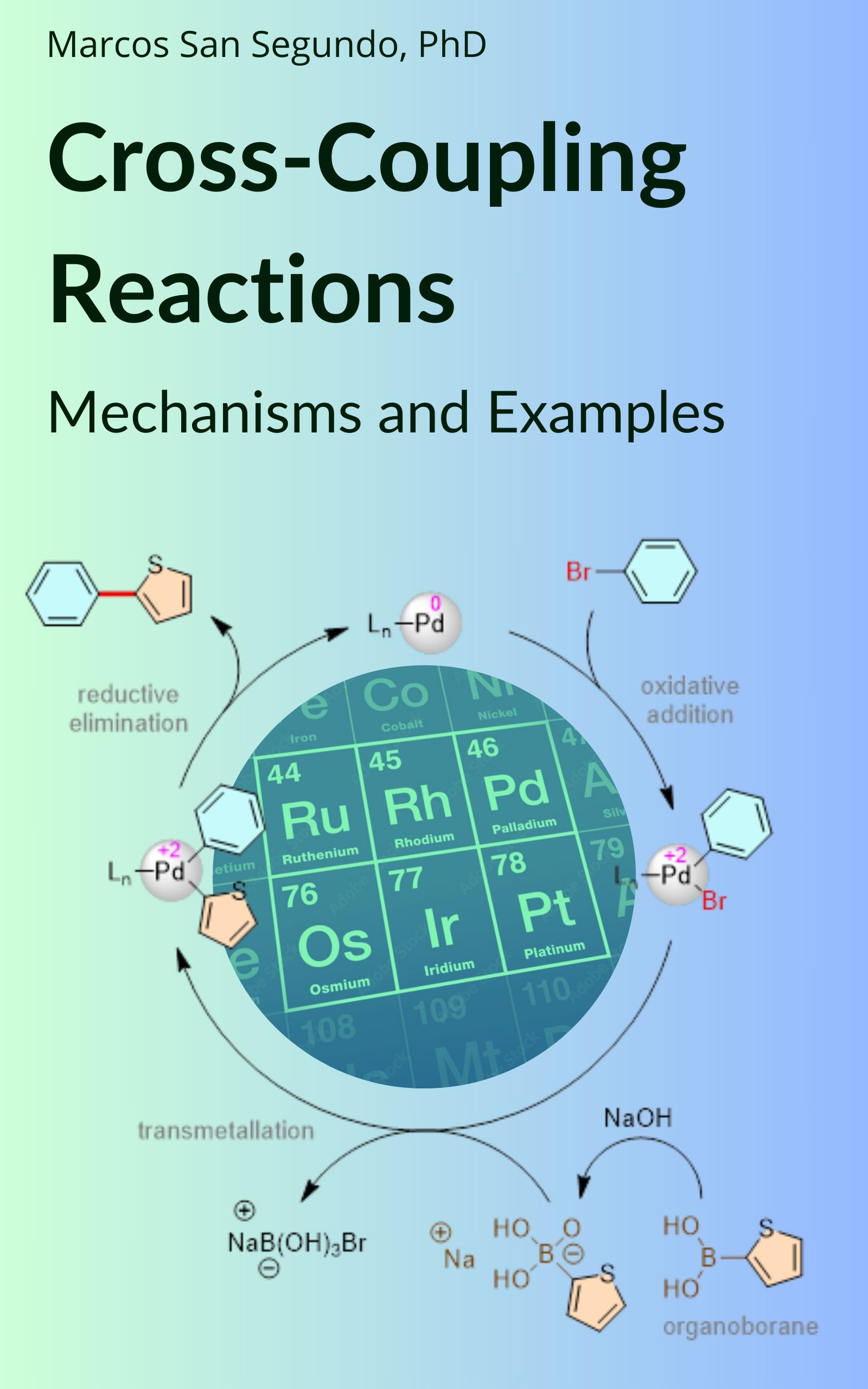
Cross-Coupling Reactions: Mechanisms and Examples
This page covers the Fukuyama Reduction — one of 21 named reactions in the book, each with its full catalytic cycle and every worked example shown here, drawn straight from the primary literature.