Home / Reactions / Cross-Coupling Reactions / Chan-Evans-Lam Cross-Coupling

What is the Chan-Evans-Lam Cross-Coupling?

The Chan-Evans-Lam coupling forms C–N and C–O bonds between a boronic acid and an N–H or O–H nucleophile — amines, amides, anilines, phenols, alcohols — using copper instead of palladium. Because it runs near room temperature without a strong base, it is often the first reaction chemists reach for when a substrate is too sensitive for Buchwald-Hartwig conditions or when Pd contamination has to be avoided (e.g., late-stage medicinal chemistry).

Air or another mild oxidant is used to reoxidize copper back to the active Cu(II) state, so the reaction can be run with only a catalytic loading of copper salt rather than the stoichiometric copper originally reported. Boronic acids being bench-stable, non-toxic, and widely commercially available makes this an attractive, operationally simple amination method.

Reaction schemes

Chan-Evans-Lam Cross-Coupling — general reaction scheme
Chan-Evans-Lam Cross-Coupling — catalytic cycle mechanism

Catalytic cycle

Step 1

Transmetalation

The arylboronic acid transfers its aryl group to Cu(II), forming an Ar–Cu(II) species.

Step 2

Ligand exchange

The N– or O–nucleophile binds to copper, displacing the boron byproduct.

Step 3

Oxidation / reductive elimination

Cu(II) is oxidized to Cu(III) (by air or an added oxidant) and reductively eliminates the C–N or C–O bond, regenerating catalytically active copper.

Applications

Worked examples

Every example below — reagents, conditions, and literature source — is reproduced from Cross-Coupling Reactions: Mechanisms and Examples by Marcos San Segundo, PhD.

Example 1

Coupling between a secondary aliphatic amine and an aryl boronic acid catalyzed by Cu(OAc)2.

Scheme for Coupling between a secondary aliphatic amine and an aryl boronic acid catalyzed by Cu(OAc)2. — Chan-Evans-Lam Cross-Coupling
Ref. [1]
Example 2

Coupling between a phenol and an alkenyl boronic acid catalyzed by Cu(OAc)2.

Scheme for Coupling between a phenol and an alkenyl boronic acid catalyzed by Cu(OAc)2. — Chan-Evans-Lam Cross-Coupling
Ref. [2]
Example 3

Coupling between imidazole and an aryl boronic acid coupling catalyzed by Cu2O.

Scheme for Coupling between imidazole and an aryl boronic acid coupling catalyzed by Cu2O. — Chan-Evans-Lam Cross-Coupling
Ref. [3]
Example 4

Coupling between an aryl boronic acid and a primary sulfonyl amide.

Scheme for Coupling between an aryl boronic acid and a primary sulfonyl amide. — Chan-Evans-Lam Cross-Coupling
Ref. [4]
Example 5

Chan-Evans-Lam coupling of an aniline and a trialkoxysilane.

Scheme for Chan-Evans-Lam coupling of an aniline and a trialkoxysilane. — Chan-Evans-Lam Cross-Coupling
Ref. [5]
Example 6

Coupling using an aliphatic BF3K reagent.

Scheme for Coupling using an aliphatic BF3K reagent. — Chan-Evans-Lam Cross-Coupling
Ref. [6]
Example 7

Synthesis of a retinoic acid 4-hydroxylase (CYP26) inhibitor.

Scheme for Synthesis of a retinoic acid 4-hydroxylase (CYP26) inhibitor. — Chan-Evans-Lam Cross-Coupling
Example 8

Synthesis of structures with anticancer properties.

Scheme for Synthesis of structures with anticancer properties. — Chan-Evans-Lam Cross-Coupling
Ref. [7]
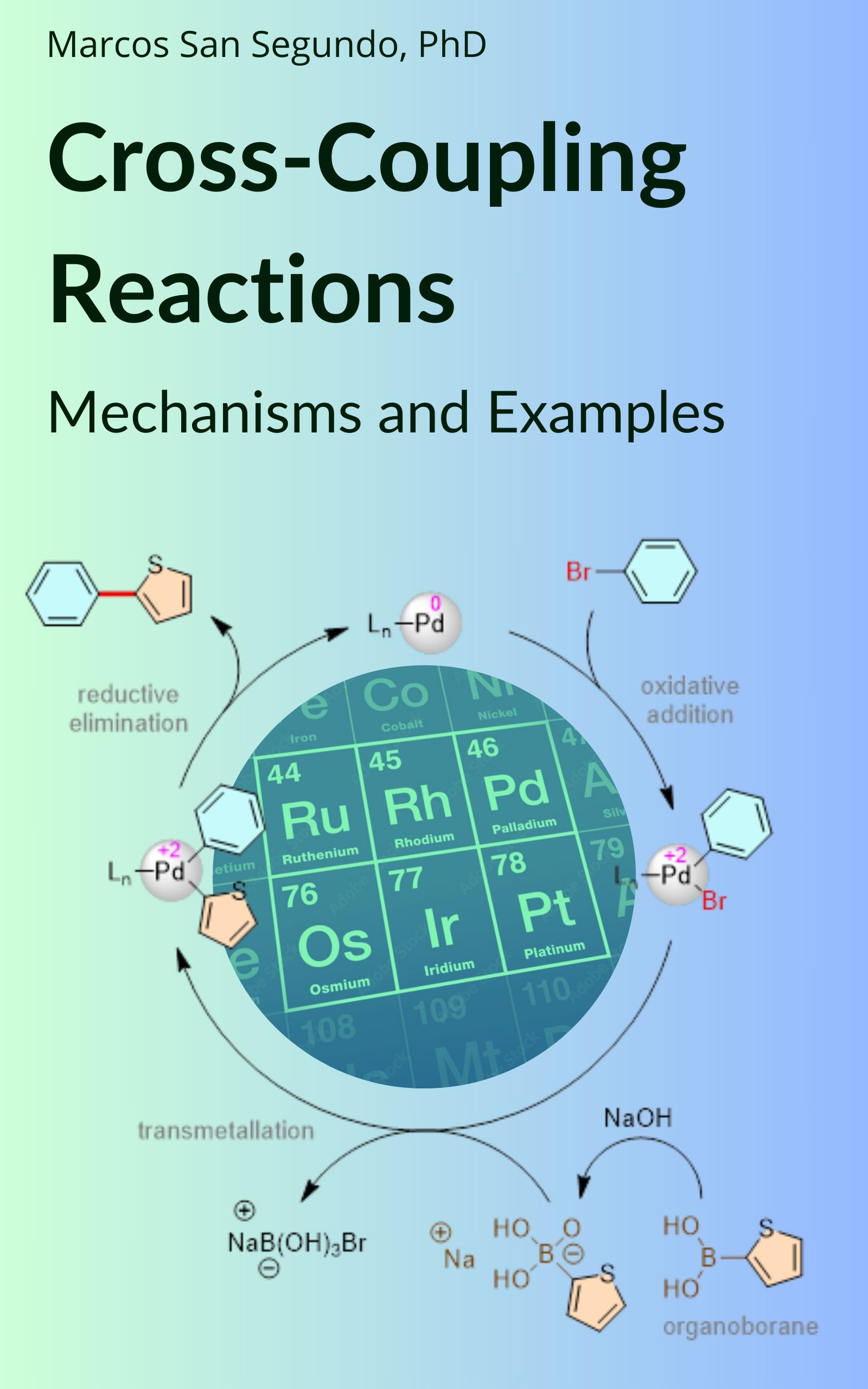
Cross-Coupling Reactions: Mechanisms and Examples book cover
Textbook · Organic Chemistry

Cross-Coupling Reactions: Mechanisms and Examples

This page covers the Chan-Evans-Lam Cross-Coupling — one of 21 named reactions in the book, each with its full catalytic cycle and every worked example shown here, drawn straight from the primary literature.

Get the book on Amazon → Free sample chapter

References

[1]
Chan, D. M. T.; Monaco, K. L.; Wang, R.-P.; Winters, M. P. Tetrahedron Lett. 1998, 39, 2933.
[2]
Lam, P. Y. S.; Vincent, G.; Bonne, D.; Clark, C. G. Tetrahedron Lett. 2003, 44, 4927.
[3]
Sreedhar, B.; Venkanna, G. T.; Kumar, K. B. S.; Balasubrahmanyam, V. Synthesis. 2008, 795.
[4]
Nasrollahzadeh, M.; Ehsani, A.; Maham, M. Synlett. 2014, 25, 505.
[5]
Q. Xie, X. Zhang, H. Liu, F. Zhang, X. Luo and H. Luo, Asian J. Org. Chem. 2022, 11, e202100792.
[6]
Derosa, J.; O’Duill, M. L.; Holcomb, M.; Boulous, M. N.;Patman, R. L.; Wang, F.; Tran-Dubé , M.; McAlpine, I.; Engle, K. M. J. Org. Chem. 2018, 83, 3417.
[7]
Judd, W. R.; Slattum, P. M.; Hoang, K. C.; Bhoite, L.; Valppu,L.; Alberts, G.; Brown, B.; Roth, B.; Ostanin, K.; Huang, L.; et al. J. Med. Chem. 2011, 54, 5031.

Related reactions